Archives by: webmaster

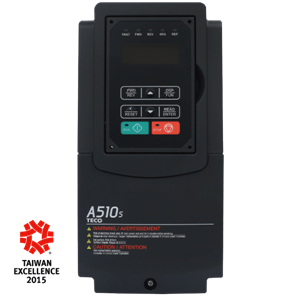
TECO AC Motor Drive A510s Enhanced – Advanced Current Vector Control Drive

A510ce

TECO AC Motor Drive A510s Enhanced – Advanced Current Vector Control Drive

Perfect design for heavy overload applications like crane, lift, elevator, drill, punching and pressing machine, with our up-to-date Auto-tuning function, user can reduce mass setup time and fully extends the performance to its limit. Integrate both induction and permanent-magnet motor control technology.

Model (IP20/NEMA1)

200-240V; 1-150HP
380-480V; 1-425HP
500-600V; 1-10HP (2013/3)

Main Features

0-1200Hz output (V/F mode)
Current Vector Control

Speed Control Ratio & Starting Torque
– Close loop: 1:1000, 200%/0Hz
– Open loop: 1:100, 200%/0.5Hz
Speed and Torque Control Mode

PG Option Card
Over Voltage Suppression
PM Motor Control

Download Catalogue and Manual:

TECO Inverter A510s Enhanced Ctlg.pdf
TECO Inverter A510s Enhanced Manual.pdf

Download Software:

JN5 DriveLink setup (V1.73) – 510 series PC-Link
Read more

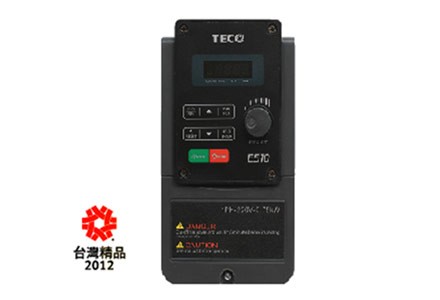
TECO AC Motor Drive E510 – Compact Vector Control Drive

E510ce

TECO AC Motor Drive E510 – Compact Vector Control Drive

A compact, robust, and versatile AC Drive with standard modbus communication. Advanced sensorless vector control function offers the most economical motor drive solution for industrial applications and OEM’s. Two enclosure types are available: IP20 & IP66.

Model

IP20/NEMA1
– 200-240V; 0.5-25HP
– 380-480V; 1-25HP
IP66/NEMA 4X Indoor use
– 200-240V; 0.5~3HP(EU)/20HP(US)
– 380-480V; 1~15HP(EU)/25HP(US)

Main Features

0-650Hz output (V/F mode)
Build in Modbus RTU/ASCII
Sensorless Vector Control
Build in Braking Transistor
Auto Carrier Frequency & de-rating control
Build in PLC Function
Parameter Lock Function

Download Catalogue and Manual:

TECO Inverter E510 Catalogue.pdf
TECO Inverter E510 Manual.pdf

Download Software:

JN5 DriveLink setup (V1.73) – 510 series PC-Link

Read more

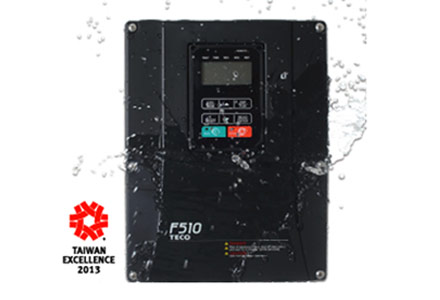
TECO AC Motor Drive F510 Enhanced – Fan & Pump Drive

F510ce

TECO AC Motor Drive F510 Enhanced – Fan & Pump Drive

With accurate auto-tune of motor parameters, users improve the efficiency of the complete system effectively. Built-in control, sleep and fire modes favorable for pumps, fans, compressors, and HVAC and communication network protocol of Modbus/ BACnet/ Metasys N2 for building automation reduces the installing cost and reaches high energy efficient. Automatic energy saving (AES) functions pushes F510 series into the high application demands of most industries.

Model

IP20/NEMA1
200-240V; 1-175HP
380-480V; 1-800HP
IP55
380-480V; 1-100HP

Special Features (For PUMP)

Build in Modbus/ BACNet/ Matasys
Constant-Pressure Control
Easy Multi Drives Connection
1 to 8 Pump Control Option Card
Keypad & Functions for Pump
    – Local/Remote control
    – Pressure (PSI) & Flow (CFM) display (LCM)
Real Time Clock, Timer Control (LCM)

Special Features (For HVAC)

Build in Modbus/ BACNet/ Matasys
Keypad & Functions for HVAC
    – HOA (Hand Off Auto) panel design
    – Fire mode
    – Pressure (PSI) & Flow (CFM) display (LCM)
Spin Start Control
Auto Energy Saving Function
PM Motor Control

Download Catalogue and Manual:

TECO Inverter F510 Enhanced Catalogue.pdf
TECO Inverter F510 Enhanced Manual.pdf

Download Software:

JN5 DriveLink setup (V1.73) – 510 series PC-Link
Read more

TECO AC Motor Drive L510s – Compact V/F Control Drive

L510ce

TECO AC Motor Drive L510s – Compact V/F Control Drive

A compact, robust, and versatile AC Drive with standard modbus communication. Offering the most economical motor drive solution for industrial applications and OEM’s.

Model

IP20
100-120V 0.25-1HP
200-240V 0.25-10HP
380-480V 1-15HP

Main Features

0-650Hz output (V/F mode)
Build in Modbus RTU/ASCII
Auto Carrier Frequency & de-rating control
Build in Braking Transistor (400V)
7 Programmable sequences
(Hz, Time, Cycle)
Supports Fire Modes
Parameter Lock Function

Download Catalogue and Manual:

TECO Inverter L510s Catalogue.pdf
TECO Inverter L510s Manual.pdf

Download Software:

JN5 DriveLink setup (V1.73) – 510 series PC-Link

Read more

PRECIMA Safety Brakes & Brake Rectifiers – General Information


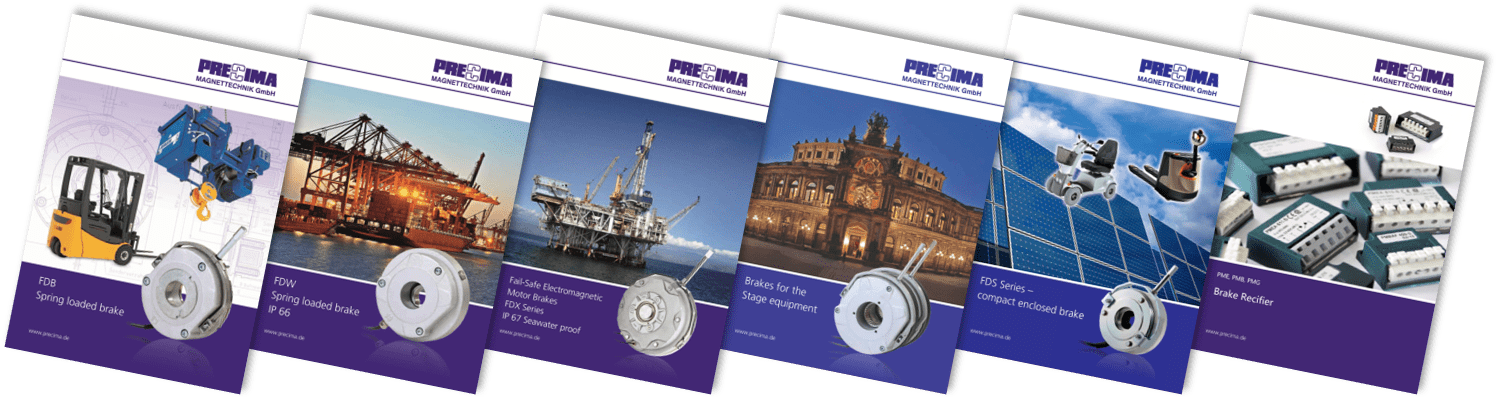
Precima Catalogues

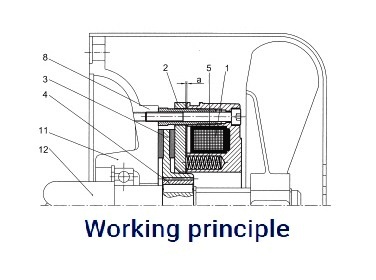
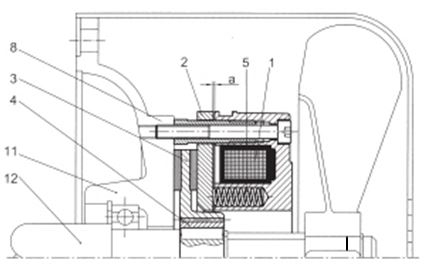
Working Principle

workingprincipal

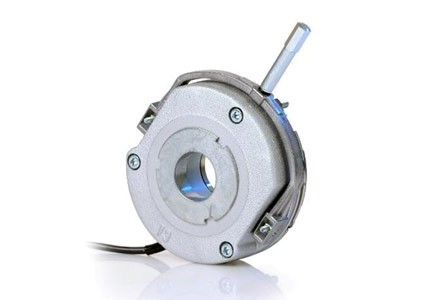
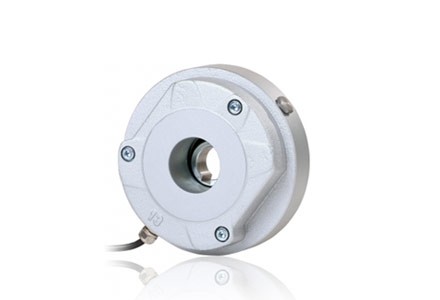
The PRECIMA spring-loaded fail-safe brakes are electromagnetically actuated single disk brakes with two friction surfaces.
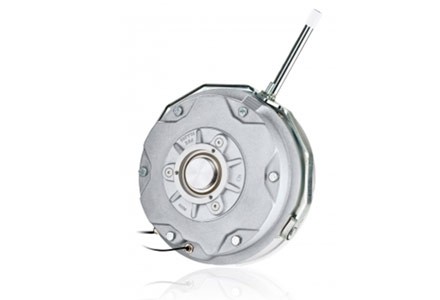
  • The braking power is applied by means of pressure springs.
  • The braking torque is generated in the condition when there is no current supply.
  • Release of the brake is effected electromagnetically.

In the absence of current, the compression springs (5), present in the magnet body (1) pushes against the axially movable armature plate (2) which locks the brake rotor (3) against the motor housing surface (8). The brake torque is transferred to the shaft via the rotor and splined hub (4). By applying direct current voltage to the coil, a magnetic field is produced in the magnet body (1). This magnetic field attracts the armature plate (2) across air gap “a” and allows the rotor to rotate and neutralize the brake torque.

Assembly

The spring-loaded brake is supplied ready to be mounted.
The air gaps for FLC, FDW & FDX brakes are fixed without adjustment.
The air gaps of FDB, FDD & FDR brakes are preset before leaving our factory, they can be adjusted later without removing the brakes from the motors.

The range of PRECIMA spring-loaded brakes

  • FDB Series: classic solid fail-safe brakes in several variations for universal use
  • FLC Series: easy to assemble, low cost Holding Brake for applications with limited friction work
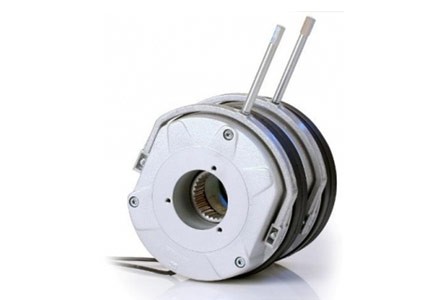
  • FDD Series: low noise double brakes for applications with high safety requirements
  • FDR Series: double friction rotor brake for high torque requirements on limited mounting space
  • FDW Series: IP66 encapsulated brake for outdoor applications or use in aggressive environment
  • FDX Series: IP67 encapsulated brake for use in very rough environments like offshore or sea climate

Accessories

For converting alternating current (AC), which periodically reverses direction, to direct current (DC), which flows in only one direction, half-wave and bridge brake rectifiers, fast acting rectifiers, and current detection relays are available.

Special solutions

In case of special mechanical and electrical requirements with respect to the spring-loaded brakes, please contact our Sales Department.

Product information

  • Standard voltages are: 24 VDC, 48 VDC, 103 VDC, 180 VDC and 205 VDC
  • Special voltages are available on request
  • Standard cable: size 05 and 06 – AWG 24; Size 08 to 30 – AWG 19
  • The air gap “a” is preset
  • The spring loaded brakes, type FLC/FDW/FDX has fixed air gap “a“, which are given through the dimensions of the parts
  • Fixed bearing not required on the side of the brake
  • Asbestos-free friction linings: Due to the special processing of the friction surface, the rated braking torques are achieved after a short running-in process

Download Information:

PRECIMA Safety Brakes & Brake Rectifiers – General Information.pdf

Read more

PRECIMA FDB Solid Safety Brakes

FDB
PRECIMA FDB Solid Safety Brakes

Since many years our FDB brake has a name as the absolute reliable brake for use in almost every application. As standard this brake is available in 10 different sizes for static or dynamic braking with re-settable air gap design.

Due to several variations and options, this brake series are preferred by motor manufactures for universal use.

  • C – Version for adjustable braking torque
  • N – Version with fixed braking torque

Options:

  • manual hand release
  • micro switch or inductive sensor to monitor brake function or wear limit
  • friction plate or adapter flange
  • tapped holes for tacho mounting
  • dust protection ring
  • temperature sensor
  • rest period heating
  • low noise version


Universal Brake With Versatile Module
ABUS CRANE SYSTEMS

Download Catalogue and Manual:


FDB.pdf
Manual FDB eng 04.13.pdf
Precima brake solutions for Pitch- and Yaw-drives catalog.pdf

You Tube Links:

How to Adjust Brake Air Gap | NORD DRIVESYSTEMS Group
How to Adjust Brake Torque | NORD DRIVESYSTEMS Group
How to Mount a Brake Hand Release to a Brake Coil | NORD DRIVESYSTEMS Group

Read more

PRECIMA FDW Dust & Waterproof Safety Brakes

FDW
PRECIMA FDW Dust & Waterproof Safety Brakes

Through its body design, FDW is a fully encapsulated (IP 66) brake sealed from outside influence. These solid industrial brakes, available in 9 sizes, are used for outdoor applications and in aggressive environment. Very easy assembly through fixed air gap.

Options:

  • sealed manual hand release
  • tapped holes for encoder / tacho assembly
  • rest period heating
  • temperature sensor
  • inductive sensor / sensor for monitoring brake or wear limit


Solutions for different Industrial Sector
Solutions for different industrial sector

Download Catalogue and Manual:

FDW.pdf
Manual FDW eng 11.12.pdf
Precima brake solutions for Pitch- and Yaw-drives catalog.pdf

Read more

PRECIMA FDX Seawater Resistant Safety Brakes

FDX
PRECIMA FDX Seawater Resistant Safety Brakes

Our new FDX Series stands for encapsulated, solid IP 67 brake which is designed for the use in very rough environments like offshore or sea climate.

All parts are manufactured from very tough and strong materials and designed to permanently protect the inside functional parts of the brake from outer influence like heavy seas or salt.

Options:

  • FDX series with special IP67 sealed and lockable manual hand release system
  • Inside going cable for brake and switches
  • Backside of brake can be supplied completely encapsulated or for through going shafts with a double shaft sealing
  • IP67 Inductive sensor or micro switch for monitoring function or wear
  • rest period heating
  • customized terminal box

Off Shore Heavy Duty All Purpose Safety Brakes
Off Shore Heavy Duty All Purpose Safety BrakeS

Download Catalogue and Manual:

FDX.pdf
Manual FDX eng 10.09.pdf

Read more

PRECIMA FDD Noise-reduced Double Safety Brakes

FDD
PRECIMA FDD Noise-reduced Double Safety Brakes

FDD double brakes are two specially designed low noise brakes working independently from each other meeting high demands of safety.

As option (M) a micro-switch monitors the function of each brake. The design homologation in accordance with EN 81 and BGV for elevator brakes has been granted. As standard the brakes are equipped with a special one hand operated manual hand release and tapped holes for tacho or encoder mounting.

Options:

  • micro switch for monitoring brake
  • friction plate or adapter flange


Solutions for Elevators & Stage Technology

Download Catalogue and Manual:

FDD.pdf
Manual FDD eng 04.13.pdf

Read more

PRECIMA FDR Double Rotor Safety Brakes

FDR
PRECIMA FDR Double Rotor Safety Brakes


The FDR double rotor brake is designed to allow maximum braking torque in confined mounting space. In order to attain sufficient wear results for these brakes, we recommend to use our PMG fast response rectifiers.

Options:

  • manual hand release
  • micro switch or inductive sensor for monitoring brake or wear limit
  • friction plate or adapter / flange
  • tapped holes for tacho mounting
  • temperature sensor
  • rest period heating

Download Catalogue:

FDR.pdf

Read more

PRECIMA Full-Wave Bridge(PMB), Half-Wave(PME) & Fast Excitation(PMG) Brake Rectifiers

Precima Rectifers
Precima Rectifers

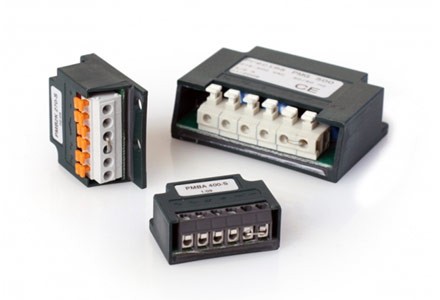
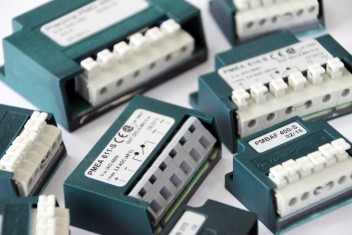
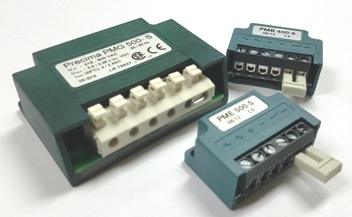
PRECIMA Full-Wave (Bridge), Half-Wave & Fast Excitation Brake Rectifiers
PMB = Bridge (or Full-Wave) Rectifier
PME = Half-Wave Rectifier
PMG = Fast Response Rectifier

These compact modules have been specially designed to be fitted into the terminal boxes of electric-motors.

The PME half wave rectifier which halves the supply voltage (45% of the supply voltage) is the most cost effective.

The PMB full wave bridge rectifier produces a smooth DC voltage (90% of the supply voltage).

Both rectifiers are available for switching on AC or DC side.

Varistors in the input and output protect the rectifiers from surge voltage.

The PMG fast excitation rectifier is recommended whenever short release time or low dissipation is required. It combines the benefits of the half wave and bridge rectifiers.

Download Catalogue:

Precima Rectifiers.pdf

Links:

AC Voltage Switching versus DC Voltage Switching of a Rectifier
Precima Fast Excitation Rectifier PMG500 & Its Applications

Read more

Gearbox and its Function

What is a gearbox?

gear1

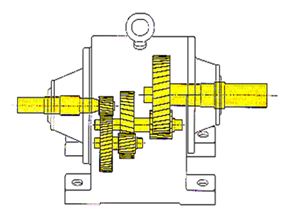
A speed reducer is an arrangement of gears in an enclosed housing. The reducer contains shafts, bearings and some other parts. The gears are mounted on shafts and the bearings support the shafts. The reducer housing generally contains some form of lubricant (e.g. oil or grease) to lubricate the gears and bearings. Reducers come in a wide range of shapes and sizes to accommodate a broad range of uses.

Reasons for using a gearbox:

  • Less expensive to manufacture motors at higher speed rather than lower speed, for the same amount of power.
  • Most machines require a lower speed than the motors produced.
  • Gears are compact in size for the amount of power they can transmit and are also quite durable. They do not slip like belts for example.
  • The correct amount of lubricants can be controlled and at the same time kept clean.
  • The housing serves as a safety guard, bearing support and lubricant reservoir.

Functions of a gearbox:

  • Most commonly being used to change the speed from the input shaft to the output shaft – the speed can be either reduced or increased.
  • When speed is reduced, torque is increased and vise versa.
  • It can be used to change the direction of a shaft, e.g. worm gear for right angle application.
  • It may be used to change the direction of shaft rotation, from clockwise to counter-clockwise.
Read more

Coefficient of Friction

Coefficient of Friction

The coefficient of friction, often symbolized by the Greek letter µ, is a dimensionless scalar value which describes the ratio of the force of friction between two bodies and the force pressing them together. The coefficient of friction depends on the materials used; for example, ice on steel has a low coefficient of friction, while rubber on pavement has a high coefficient of friction. Coefficients of friction range from near zero to greater than one.

The static coefficient of friction is also called the starting coefficient of friction, and has the symbol µo.

The sliding coefficient of friction is also called the kinetic coefficient of friction, and has the symbol µ.

Mat’l Description Coefficients of Friction
steel
on
steel
static-dry
sliding-dry
static-greased
sliding-greased
µo = 0.12~0.60
µ = 0.08~0.50
µo = 0.12~0.35
µ = 0.04~0.25
wood
on
steel
static-dry
sliding-dry
µo = 0.45~0.75
µ = 0.30~0.60
wood
on
wood
static-dry
sliding-dry
µo = 0.40~0.75
µ = 0.30~0.50
polymer
belt
on
steel
static-dry
sliding-dry
µo = 0.25~0.45
µ = 0.25
steel
on
plastic
static-dry
sliding-dry
µo = 0.25~0.45
µ = 0.18~0.35

Although the dynamic friction coefficient for rolling bearings varies with the type of bearings, load, lubrication, speed, and other factors; for normal operating conditions, the approximate friction coefficients for various bearing types are listed in the table below.

Bearing Type Coefficient x 10¯³ (µ)
Deep groove ball bearings 1.0 ~ 1.5
Angular contact ball bearings 1.2 ~ 1.8
Self-aligning ball bearings 0.8 ~ 1.2
Cylindrical roller bearings 1.0 ~ 1.5
Needle roller bearings 2.0 ~ 3.0
Tapered roller bearings 1.7 ~ 2.5
Spherical roller bearings 2.0 ~ 2.5
Thrust ball bearings 1.0 ~ 1.5
Thrust roller bearings 2.0 ~ 3.0
Data from NTN Corporation
Bearing Friction Coefficient (µ)
Roller bearing 0.001 ~ 0.005
Friction bearing 0.080 ~ 0.100
Spindle (Acme greased) 0.050 ~ 0.080
Spindle (Acme dry) 0.100 ~ 0.180
Spindle (Ball) 0.005 ~ 0.050
Roller bearing supported wheels 0.003
Friction bearing supported wheels 0.005
Side guide rollers 0.002
Read more

Mechanical Efficiency

Mechanical Efficiency

Mechanical efficiency measures the effectiveness of a machine in transforming the energy and power that is input to the device into an output force and movement. Efficiency is measured as a ratio of the measured performance to the performance of an ideal machine:

Efficiency


Transmission ElementsEfficiency
Wire Ropes per complete wrap around drums
(sleeve or anti-friction bearings)
η = 0.91 – 0.95
V-Belts per complete wrap of the belt around the pulley
(with normal belt tension)
η = 0.88 – 0.93
Polymer Belts per complete wrap
(rollers have anti-friction bearings)
(with normal belt tension)
η = 0.81 – 0.85
Rubber Belts per complete wrap
(rollers have anti-friction bearings)
(with normal belt tension)
η = 0.81 – 0.85
Chains per complete wrap
(gears have anti-friction bearings)
(dependent on chain size)
η = 0.90 – 0.96
Spindles (Acme)
η = 0.30 – 0.70
Spindles (Ball)
η = 0.70 – 0.95
Gear Units per stage of helical/bevel gears, oil lubricated, dependent on gear unit quality
η = 0.97 – 0.98

for helical-worm or worm gear units consult the manufacturer’s information

Read more

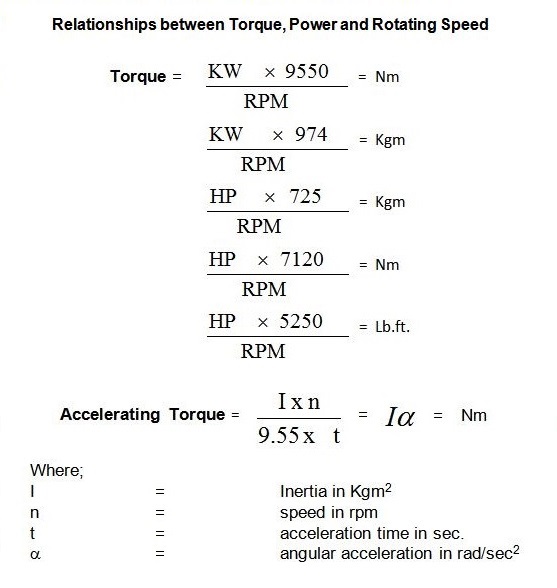
Torque and Power

Torque

Torque, moment or moment of force, is the tendency of a force to rotate an object about an axis, fulcrum, or pivot. Just as a force is a push or a pull, a torque can be thought of as a twist to an object. Mathematically, torque is defined as the cross product of the lever-arm distance and force, which tends to produce rotation.

Torque = Force X Radius

toque

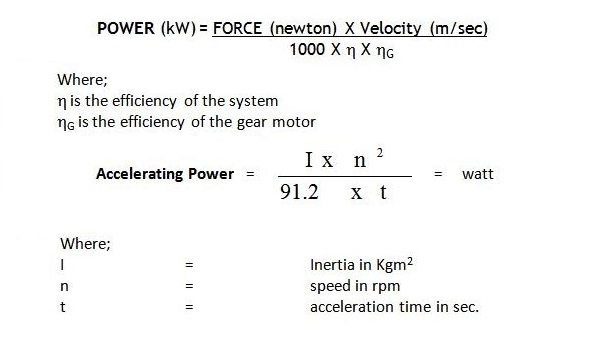
Power

In physics, Power (symbol: P) is defined as the amount of energy consumed per unit time. In the MKS system, the unit of power is the joule per second (J/s), known as the watt (in honor of James Watt, the eighteenth-century developer of the steam engine).

Power = Force X Velocity

power1

Read more

3 Types of Loads (Constant Torque/Constant Power/Variable Torque)

3 types of loads:

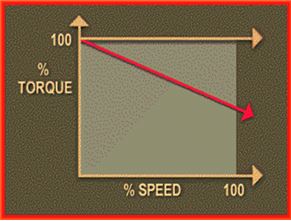
Type 1 – CONSTANT TORQUE LOADS

load1

Constant torque loads require the same amount of torque at low speeds as at high speeds. Torque remains constant throughout the speed range, and the horsepower increases and decreases in direct proportion to the speed. Constant torque loads include most positive displacement and reciprocating pumps and compressors as well as traction drives and conveyors. With constant torque loads, the torque is not a function of speed. As speed is changed, the load torque will remain fairly constant and the horsepower will change linearly with the speed.

For example, if the speed increases by 50%, then the power required to drive the operation will increase 50% while the torque remains constant.

Type 2 – CONSTANT POWER LOADS

load2

Constant horsepower loads require high torque at low speeds and low torque at high speeds, which means constant horsepower at any speed. Constant horsepower loads include grinders, winding machines and lathes. For constant horsepower loads, the torque loading is a function of speed up to 100% operating speed. As the speed of the operation is decreased, the torque increases so that the horsepower required remains essentially constant.

Type 3 – VARIABLE TORQUE LOADS

load3

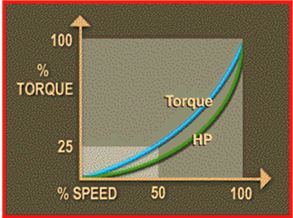
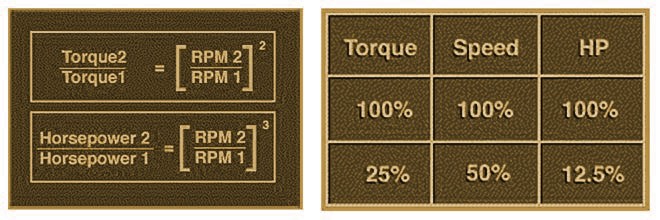
Variable torque loads require much lower torque at low speeds than at high speeds. The torque required varies as the square of the speed and the horsepower required varies as the cube of the speed. Variable torque loads include most centrifugal and axial pumps, fans and blowers and many mixers and agitators.

As the speed is decreased, the torque will decrease by the square of the speed decrease and the horsepower required decreases by the cube of the speed decrease.

load4

As an example, when the speed of a variable torque load is reduced by 50% or one half, the torque required to drive the load is reduced to one-quarter or 25%. The horsepower is reduced to the speed cubed, which is 1/8, or 12.5% of that required to drive the load at full speed.

Read more

Service Factors

Service Factors

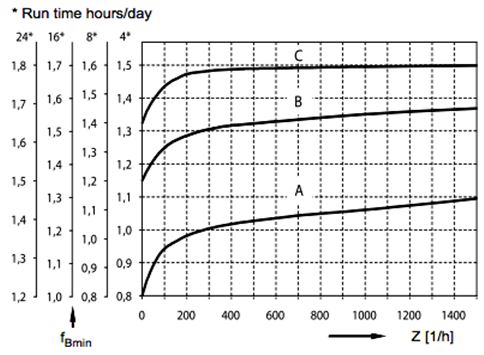
Service factor FS is a coefficient that enables to take into consideration real operating conditions of the gearbox. In order to make a correct selection, the service factor of the gearbox must be higher than the one required for the application.

Table below gives indications for the right selection having determined the classification of the uniformity of operation.

service-factor

A) Uniform operation

Light screw conveyors, fans, assembly belts, light conveyor belts, small agitators, elevators, cleaning machines, filling machines, testing machines and belt conveyors.

B) Moderate shocks, non-uniform operation

Decoilers, feed drives for wood processing machines, hoists, balancing machines, tapping units, heavy conveyor, belts, winches, sliding doors, stall dunging machines, packaging machines, cement mixers, crane traveling mechanisms, mills, bending machines and gear pumps.

C) Heavy shocks, extreme non-uniform operation

Stirrers and mixers, shears, presses, centrifuges, rolling stands, heavy winches and lifts, grinding mills, stone crushers, bucket elevators, punching machines, hammer mills, eccentric presses, folding machines, roller tables, tumbling barrels, choppers, shredders, vibrators.

Service Factor Consideration of stop-start frequency

Correction factor fs have to be applied for Gear Boxes operating with more than 10 starts per hour.

Starts / Operating Hour 10 11~200 above 200
Correction factor fs 1 1.1 1.4
Read more

Mass Moments Inertia of Bodies

Mass Moments Inertia of Bodies

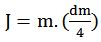
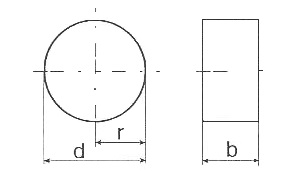
Mass moments inertia (J) of bodies in Kgm²

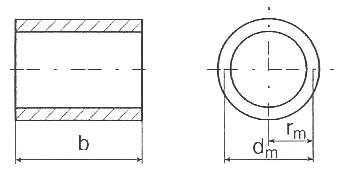
Thin wall hollow cylinder

j1
where m = mass in Kg; dm = mean diameter in m

Thin wall cylinder

Solid cylinder

j2
where m = mass in Kg; d = diameter in m

Solid cylinder

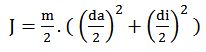
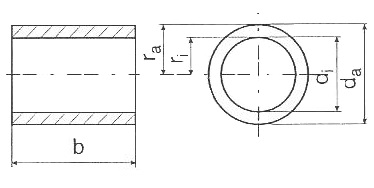
Thick wall hollow cylinder

j3
where m = mass in Kg; da = outer diameter in m; di= inner diameter in m

Thick wall cylinder

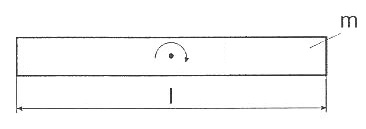
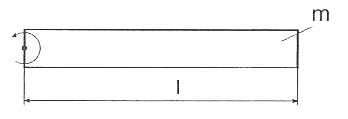
Long thin bar with pivot point at center of gravity

j4
where m = mass in Kg; l = Length of thin bar in m

Long thin bar with pivot point at center of gravity

Long thin bar with pivot point at end of bar

j5
where m = mass in Kg; l = Length of thin bar in m

Long thin bar with pivot point at end of bar

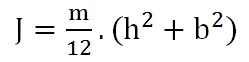
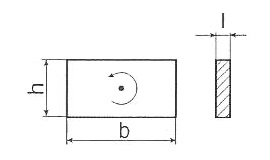
Rectangular plate with pivot point at center of gravity

j6
where m = mass in Kg; h = breadth of rectangular plate in m; b = length of rectangular plate in m

Rectangular plate with pivot point at center of gravity

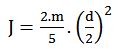
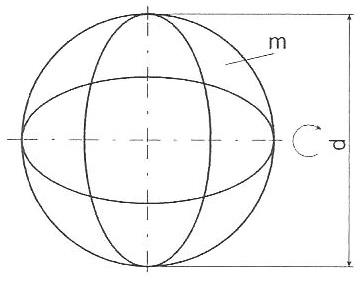
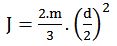
Solid ball rotating at center of gravity

j7
where m = mass in Kg; d = diameter of solid ball in m

Solid ball rotating at center of gravity

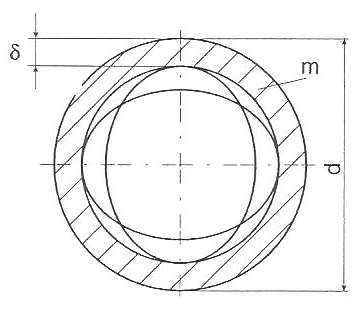
Thin-walled ball shell rotating at center of gravity

j8
where m = mass in Kg; d = outer diameter of thin-walled ball shell in m

Thin-walled ball shell rotating at center of gravity
Read more

Technical Characteristic of a Three-phase AC Motor

Technical characteristic of a three-phase AC motor:

acmotor char

Read more

Synchronous Speed of Three-Phase AC Motor

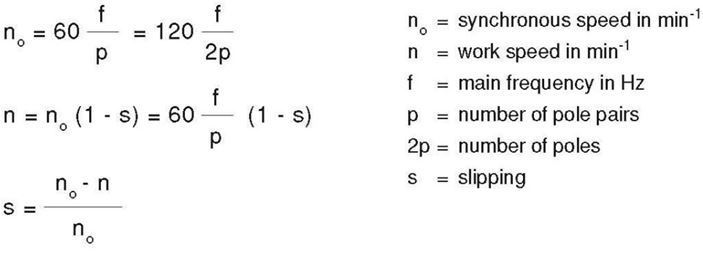
Synchronous speed of a three-phase AC motor:

speed

2p f p
50Hz 60Hz 100Hz 200Hz 400Hz
2 3000 3600 6000 12000 24000 1
4 1500 1800 3000 6000 12000 2
6 1000 1200 2000 4000 8000 3
8 750 900 1500 3000 6000 4
10 600 720 1200 2400 4800 5
12 500 600 1000 2000 4000 6
Read more

Star and Delta Connections

Star and Delta Connections

star-delta-connections

star-delta-connections

Read more

IEC60034-7 Mounting Arrangement (IM) Code

IEC60034-7 Mounting Arrangement (IM) Code

The following table shows the mounting arrangement (IM) Code with reference to IEC60034-7 Standard.
Code II (Code I)

common mount

Remarks:-

It is important to nominate the “IM” code to ensure that drain holes are in the correct position and bearing arrangement is checked for suitability if the “IM” code differs from standard.

Read more